GLUTATHIONE
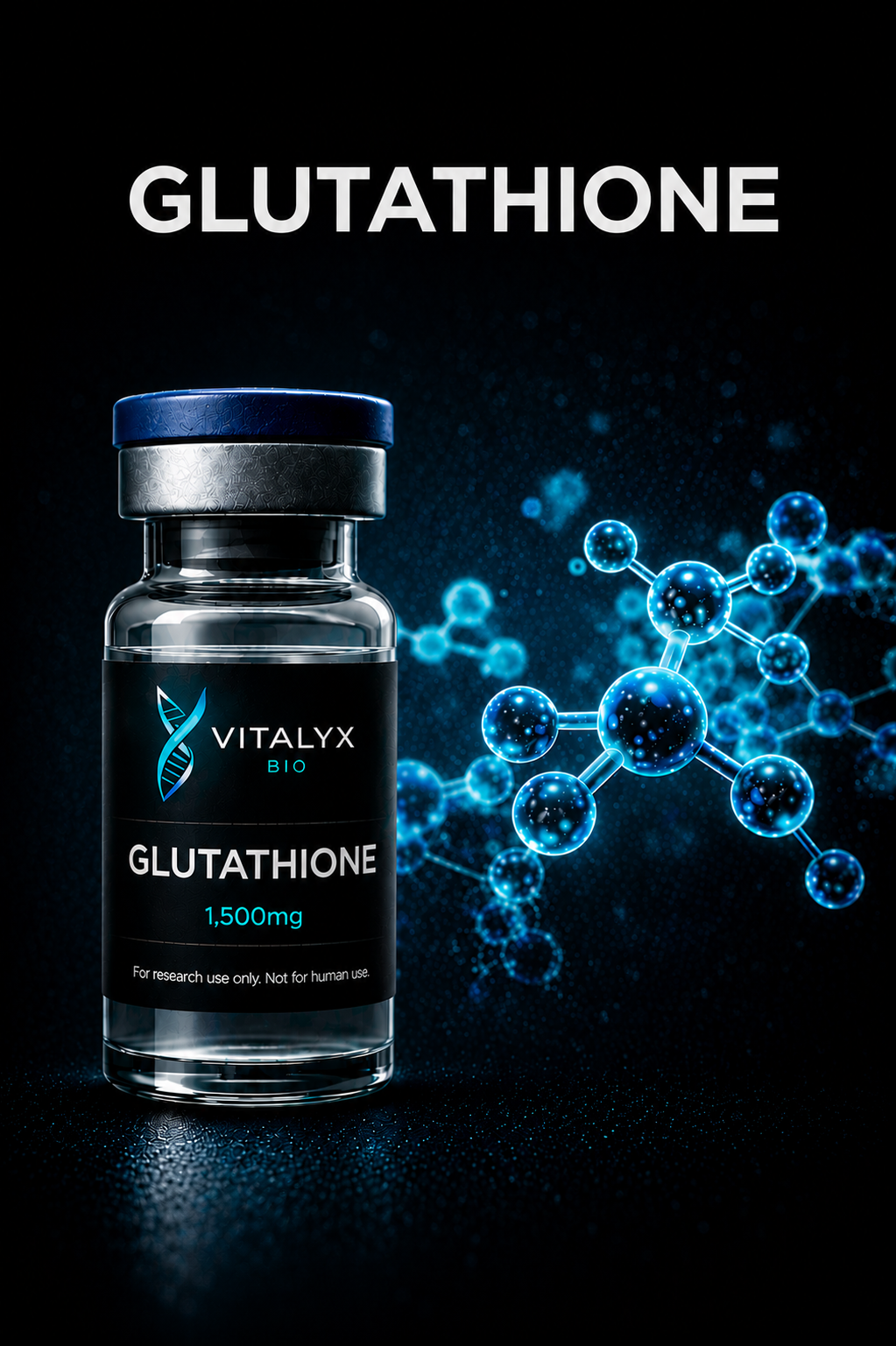
A tripeptide (glutamate–cysteine–glycine) often referred to in the literature as the “master antioxidant,” glutathione is central to cellular redox research. Each Vitalyx Bio vial contains 1,500 mg of reduced glutathione (GSH) as a lyophilized powder, supplied strictly for in-vitro and laboratory research.
Found in high concentrations across nearly every mammalian cell, glutathione is critical to the maintenance of intracellular redox homeostasis. Research interest centers on its capacity to protect cellular components from oxidative damage caused by reactive oxygen species, heavy metals, and free radicals.
MECHANISM OF ACTION
- Direct Radical Scavenging — the sulfhydryl (SH) group of the cysteine moiety acts as a direct scavenger of free radicals, neutralizing them before they can damage DNA or lipid membranes.
- Phase II Detoxification — glutathione is a key substrate for glutathione S-transferase (GST), which conjugates toxins and xenobiotics to render them water-soluble for excretion — a pathway heavily studied in liver and metabolic-clearance research.
- Glutathione Peroxidase/Reductase Cycling — studied as the central substrate in the enzymatic cycle that neutralizes reactive oxygen species and regenerates the cell’s antioxidant reserve.
- Mitochondrial Oxidative-Stress Buffering — investigated for its contribution to redox balance within the mitochondrial matrix.
RESEARCH APPLICATIONS
- Oxidative-Stress Research — used as a reference antioxidant across cell-culture models examining ROS-mediated cellular damage.
- Detoxification Biology — studied in models of Phase II hepatic detoxification and xenobiotic clearance.
- Intracellular Thiol Balance — a foundational subject in research on the cell’s overall antioxidant reserve capacity.
STORAGE & RECONSTITUTION
Keep the sealed, lyophilized vial cool, dry, and out of light, where it remains stable long-term before reconstitution. Reconstitute using sterile bacteriostatic water, directing the stream gently down the inside wall of the vial rather than onto the powder, and swirl — do not shake — until fully dissolved. Glutathione is sensitive to oxidation once reconstituted; use promptly or store refrigerated at 2–8°C, avoid freeze–thaw cycles, and follow your laboratory’s handling protocols.
This compound is strictly for in-vitro laboratory research use only and is not for human consumption, diagnostic, or therapeutic purposes.
REFERENCES
- Wu, G., et al. (2004). Glutathione metabolism and its implications for health. Journal of Nutrition.
- Forman, H.J., et al. (2009). Glutathione: overview of its protective roles, measurement, and biosynthesis. Molecular Aspects of Medicine.