TESAMORELIN — GHRH ANALOG FOR GROWTH-HORMONE-AXIS RESEARCH
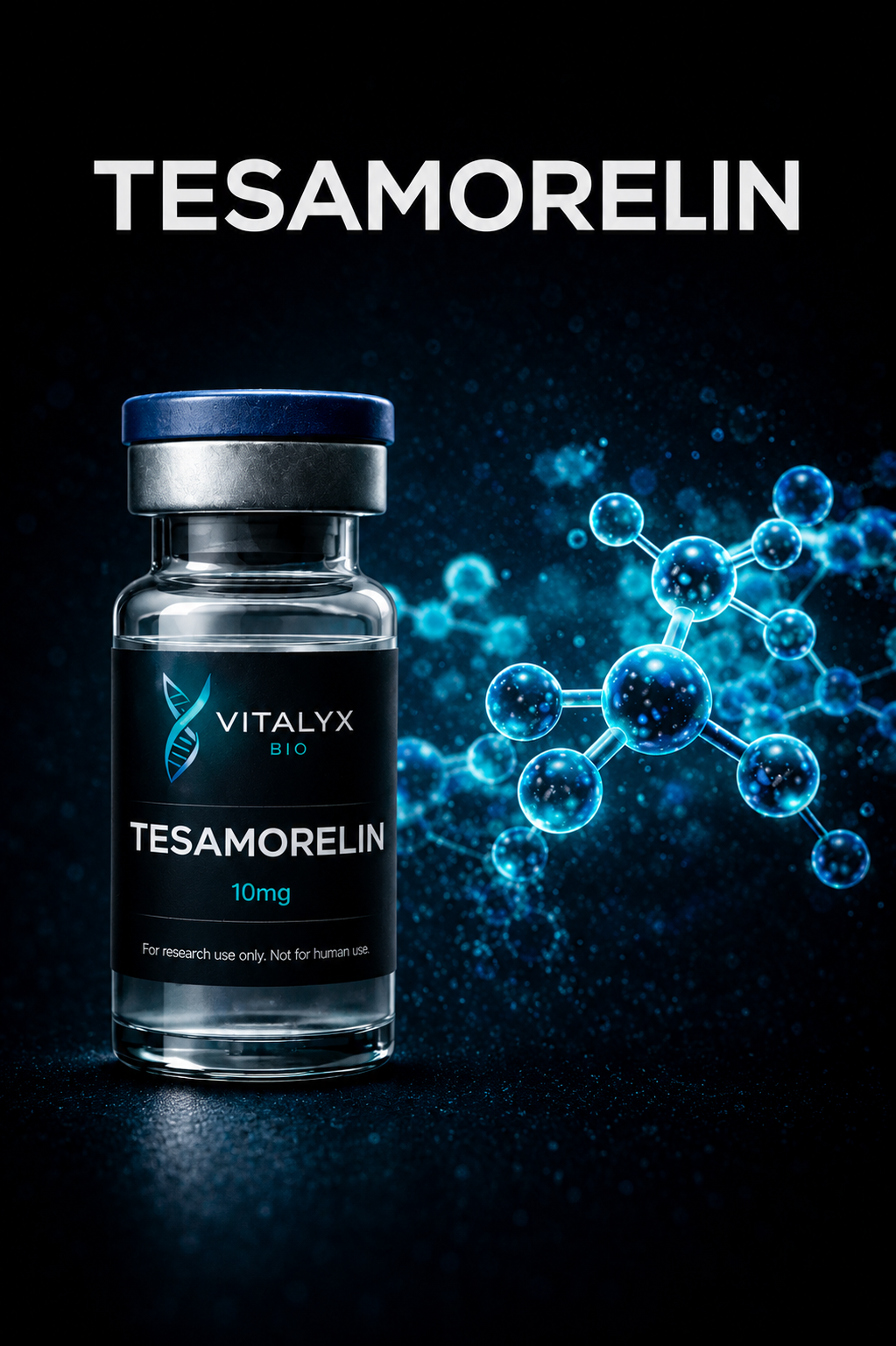
A synthetic, stabilized analog of growth-hormone-releasing hormone (GHRH), tesamorelin is one of the most frequently referenced compounds in pituitary and metabolic research. Each Vitalyx Bio vial contains 10 mg of tesamorelin as a lyophilized powder, supplied strictly for in-vitro and laboratory research.
MECHANISM OF ACTION
- Pituitary GHRH Receptor Binding — engineered to resist enzymatic degradation, extending engagement with the GHRH receptor relative to native GHRH.
- Pulsatile Growth-Hormone Release — studied for its effect on the amplitude and frequency of endogenous GH secretion pulses.
- IGF-1 Axis Signaling — investigated for downstream changes in insulin-like growth factor 1, a key marker of somatotropic-axis activity.
- Visceral Adipose Tissue Lipolysis — studied for its influence on lipolytic signaling and macronutrient partitioning within visceral fat depots.
RESEARCH APPLICATIONS
- Growth-Hormone-Axis Research — used as a reference GHRH analog in models of pituitary receptor pharmacology.
- Metabolic Research — studied for its role in lipid partitioning and visceral fat metabolism.
- IGF-1 Signaling Studies — investigated for its ability to raise baseline IGF-1 without substantially altering glucose homeostasis.
RECONSTITUTION & STORAGE
Store the sealed, lyophilized vial cool, dry, and protected from light — it remains stable for extended periods in this state. Reconstitute with bacteriostatic water only, adding solvent slowly down the vial wall rather than directly onto the powder to protect the peptide structure. Once reconstituted, store refrigerated at 2–8°C, minimize light exposure, and avoid repeated freeze–thaw cycles, which can degrade peptide integrity. Defer to your laboratory’s standard handling protocols for aseptic technique and disposal.
This product is sold strictly for laboratory research use only. Not for human use, consumption, or therapeutic application.
REFERENCES
- Falutz, J., et al. (2007). Metabolic effects of a growth hormone-releasing factor: research findings from a peer-reviewed clinical literature review. New England Journal of Medicine.
- Stanley, T.L., et al. (2014). Effects of tesamorelin on visceral fat and liver fat: research findings from a peer-reviewed clinical literature review. JAMA.