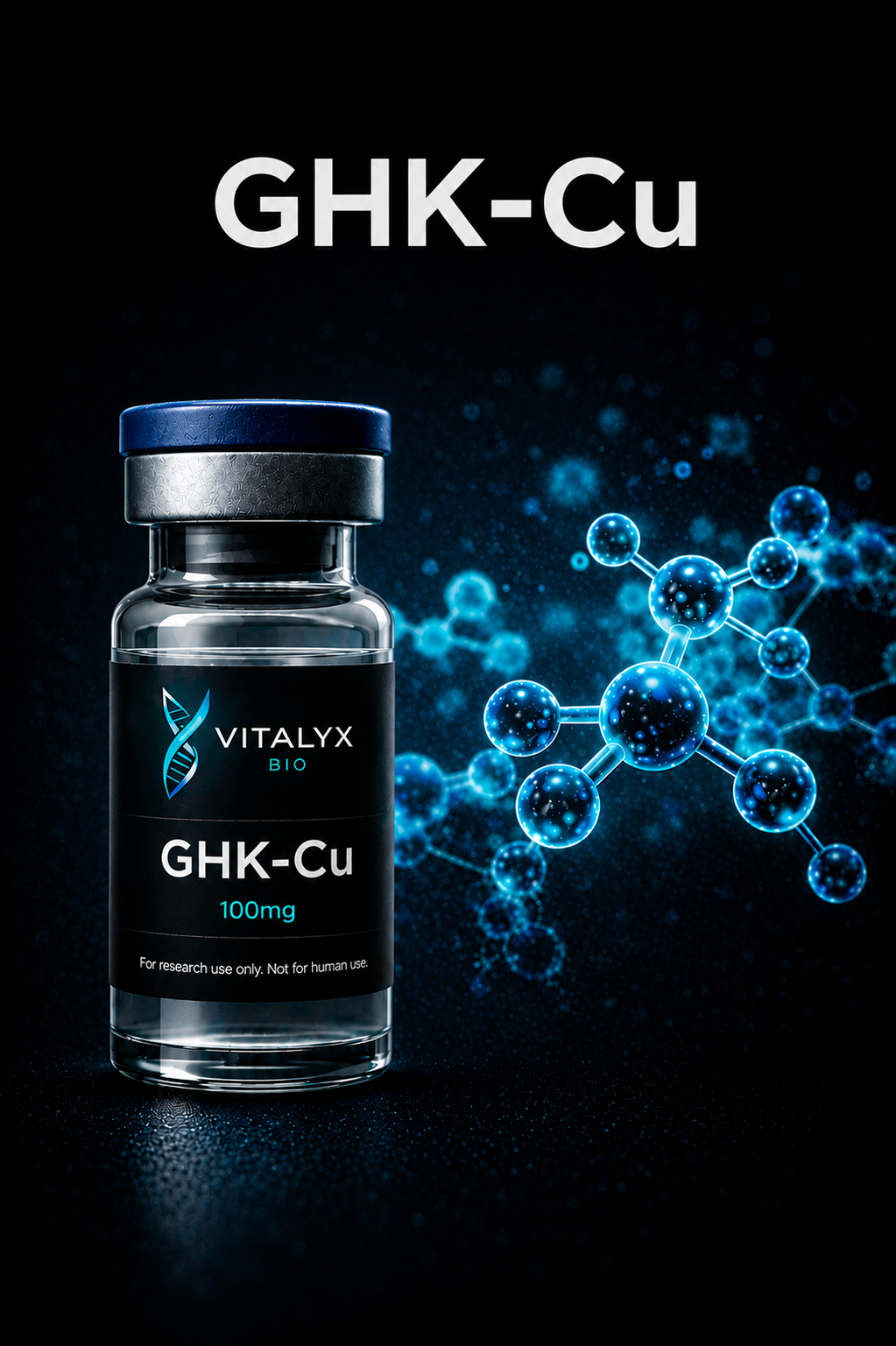
GHK-CU
A naturally occurring copper-binding tripeptide (glycyl-L-histidyl-L-lysine), GHK-Cu is a central tool compound in dermal tissue-remodeling, extracellular-matrix, and cellular-signaling research. Each Vitalyx Bio vial contains 100 mg of GHK-Cu as a lyophilized powder, supplied strictly for in-vitro and laboratory research.
First isolated from human plasma in 1973, GHK-Cu is distinguished by its high affinity for copper(II) ions, which gives the reconstituted solution its characteristic blue coloration. It has since become one of the most widely cited copper peptides in extracellular-matrix and cellular-signaling literature.
MECHANISM OF ACTION
- Collagen & Elastin Synthesis — in dermal models, GHK-Cu is investigated for its ability to upregulate synthesis of collagen, elastin, and glycosaminoglycans, the core structural components of the extracellular matrix.
- Tissue Remodeling & Metalloproteinase Modulation — studied for a dual-action profile: modulating breakdown of damaged tissue via matrix metalloproteinases while supporting deposition of new structural proteins.
- Gene-Expression Modulation — examined in research panels for its influence on gene-expression patterns associated with tissue remodeling and cellular signaling.
- Antioxidant & Redox Signaling — investigated for effects on inflammatory cytokine secretion and antioxidant enzyme activity, including superoxide dismutase regulation.
RESEARCH APPLICATIONS
- Dermatological & Tissue-Remodeling Research — studied as a reference compound in skin-remodeling and tissue-signaling models.
- Extracellular Matrix Studies — investigated for its role in collagen and matrix-protein signaling in tissue-remodeling research.
- Aging & Longevity Research — GHK-Cu tissue concentration is observed to decline with age in published research, a pattern that has established it as a reference compound in cellular-signaling and dermatological research.
STORAGE & RECONSTITUTION
Keep the sealed, lyophilized vial cool, dry, and out of light, where it remains stable long-term before reconstitution. Reconstitute using sterile bacteriostatic water, directing the stream gently down the inside wall of the vial rather than onto the powder, and swirl — do not shake — until fully dissolved and the solution reaches optical clarity with its characteristic blue hue; foaming indicates the peptide chain has been physically disrupted. Once reconstituted, store refrigerated at 2–8°C, avoid freeze–thaw cycles, and follow your laboratory’s handling protocols.
This compound is strictly for in-vitro laboratory research use only and is not for human consumption, diagnostic, or therapeutic purposes.
REFERENCES
- Pickart, L., et al. (2012). Oxidative Medicine and Cellular Longevity.
- Pickart, L., et al. (2015). BioMed Research International.